Closing the Loop: Adaptation, Analysis, and Feedback
In the first post, we laid the groundwork for a structured improvement process: honest self-assessment, intentional practice, and objective measurement. Those steps give you clarity—but clarity alone doesn’t make you better.
This second post is where the system starts to work back on itself.
In corporate continuous improvement models, data is only valuable if it leads to action. If results stagnate, processes are adjusted. If an approach fails, it’s analyzed rather than ignored. The same principle applies directly to PRS shooting.
Chapters 4–6 focus on what happens after you’ve put in the work and collected the data:
- How to follow up intelligently when progress stalls
- How to analyze mistakes without emotion or ego
- How to use feedback as a force multiplier rather than a threat
This is the phase where many shooters quietly opt out. It requires humility, adaptability, and a willingness to change things that feel familiar. But it’s also where the biggest gains are made.
Chapter 4: Following Up on Progress — Adapting Instead of Grinding
Tracking progress is only useful if you’re willing to respond to what it tells you.
Why Follow-Up Matters
In PRS, it’s easy to mistake effort for effectiveness. You’re practicing regularly, shooting matches, logging data—yet your scores aren’t moving. Without follow-up, this often turns into frustration or resignation.
Follow-up is the step that answers one critical question:
Is what I’m doing actually working?
Regular review allows you to:
- Confirm that improvements are real, not imagined
- Catch plateaus early instead of months later
- Reinforce methods that work and abandon those that don’t
Just like in business, ignoring performance indicators doesn’t make problems disappear—it just delays them.
Recognizing Stagnation Early
Stagnation rarely shows up as sudden failure. It’s usually subtle:
- Hit percentage stops improving despite consistent practice
- Time savings don’t translate into better stage outcomes
- The same types of misses repeat across multiple matches
This is where honesty returns as a requirement. If the metrics aren’t moving, something in the process needs adjustment. That “something” is rarely effort—it’s usually approach.
Adapting Your Methods
When progress stalls, the instinct is often to double down. More reps. More rounds. More of the same. Continuous improvement models argue the opposite: change the variable, not the volume.
Productive adaptation includes:
- Re-evaluating drills: Are they too clean compared to match conditions?
- Adjusting constraints: Less ideal supports, awkward barricade heights, uneven surfaces
- Modifying focus: Stability before speed, or vice versa, depending on the weakness
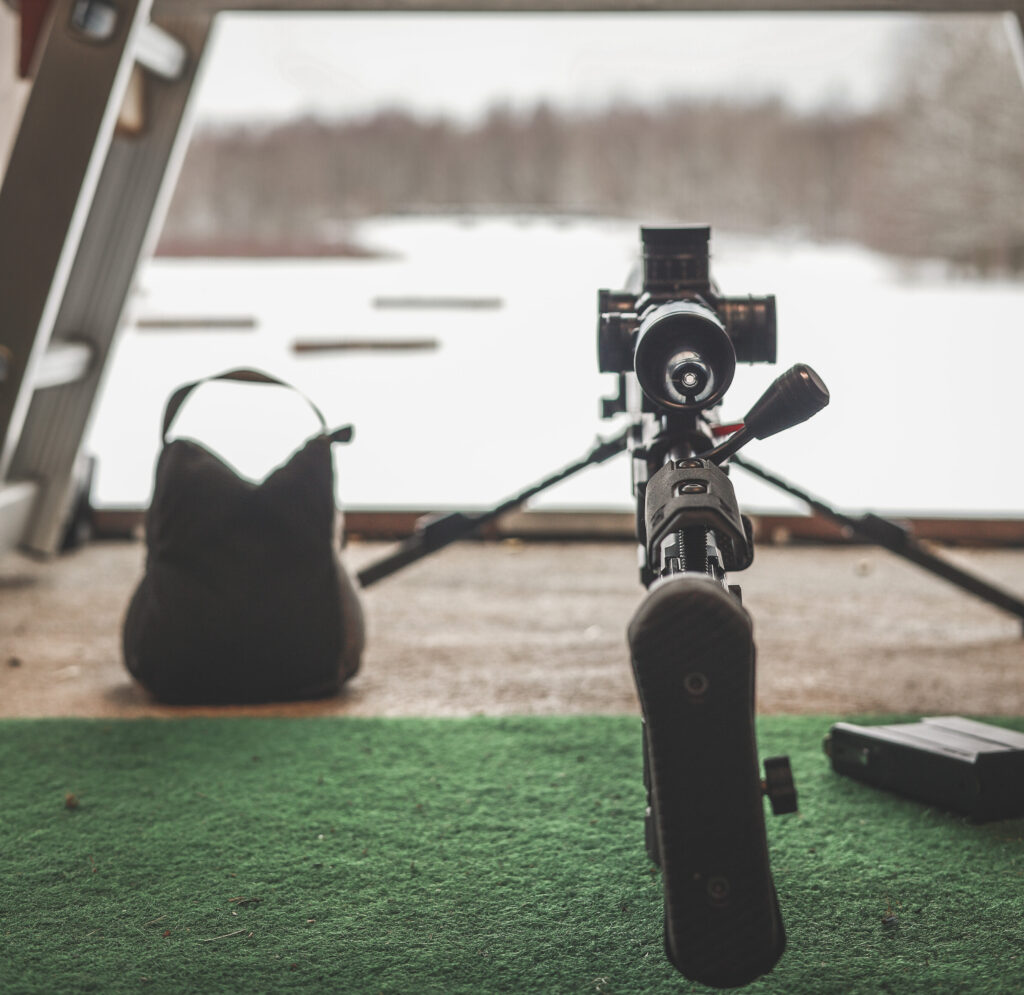
Every PRS shot is supported in some way—rocks, logs, tires, ladders, vehicles—but not all support is equal. Practicing only from perfect barricade bags and square edges can hide deficiencies that show up when the support is rounded, flexible, or offset.
Feedback as Part of Follow-Up
Following up doesn’t mean solving everything alone. External input often shortens the correction cycle dramatically. A training partner, coach, or even match video can reveal inefficiencies you’ve normalized.
Adaptation is not failure. It’s the system doing exactly what it’s supposed to do.

Chapter 5: Analyzing Mistakes — Turning Misses Into Information
Mistakes are inevitable in PRS. What separates advancing shooters from stagnant ones is how those mistakes are handled.
Mistakes Are Data, Not Judgement
A miss is not a moral failure. It’s a data point.
Too many shooters mentally label mistakes as “bad shooting” and move on. That response wastes information. Every miss happened for a reason, and that reason is usually discoverable.
Common mistake categories include:
- Poor support selection or bag placement
- Inadequate recoil management on unstable props
- Rushed position building under time pressure
- Wind calls made without enough confirmation
Each category points to a different fix. Treating all misses the same guarantees vague improvement at best.
Tools for Effective Analysis
Video Review
Filming practice and match stages is one of the fastest ways to expose inefficiencies. It reveals:
- Excessive movement during recoil
- Unnecessary repositioning between shots
- Poor body alignment to the support
- Sloppy triggerpull or moving too early after the shot breaks
Video doesn’t care how the shot felt—it shows what actually happened.
Shot Pattern Analysis
Paper targets and steel impacts tell stories. Vertical spread often points to position instability or poor natural point of aim. Horizontal spread may indicate inconsistent loading into support or wind call execution.
Patterns matter more than individual shots.
Journaling and Notes
Recording conditions, support choices, and outcomes creates long-term insight. Over time, trends emerge that aren’t visible in isolated sessions.
Mental State Review
Mistakes aren’t always mechanical. Rushing, frustration, or indecision can all degrade execution—especially late in a stage. Recognizing mental triggers is just as important as identifying physical ones.
Prioritizing Corrections
Not all mistakes deserve equal attention. Fixing a high-impact issue—like unstable loading on common barricades—will yield more benefit than obsessing over rare edge cases.
Effective analysis leads directly back into targeted practice, closing another loop in the system.
Chapter 6: Embracing Feedback — Multiplying Improvement
Feedback is one of the most underutilized tools in shooting—not because it’s unavailable, but because it’s uncomfortable.
Why Feedback Accelerates Growth
Feedback provides an external reference point. It highlights blind spots and confirms assumptions. In complex skills like PRS shooting, self-diagnosis alone is often incomplete.
Good feedback can:
- Identify inefficiencies you’ve normalized
- Validate what doesn’t need changing
- Shorten the trial-and-error cycle dramatically
The key is not just receiving feedback—but receiving it well.
Cultivating an Open Mind
An open mindset doesn’t mean accepting every suggestion blindly. It means evaluating feedback without defensiveness.
Practical habits include:
- Listening fully before responding
- Asking clarifying questions instead of justifying actions
- Separating ego from execution
The goal isn’t agreement—it’s understanding.
Taking Feedback Productively
Feedback works best when treated as input, not instruction. Test it. Validate it. Measure the result.
Useful approaches:
- Apply one change at a time to isolate impact
- Use data to confirm whether feedback improved outcomes
- Discard advice that doesn’t survive testing
When done right, feedback becomes a continuous loop: input → experiment → measurement → adjustment.
Creating a Feedback Loop
The strongest shooters build feedback into their system. They seek it regularly, apply it selectively, and revisit it objectively. Over time, this creates compounding improvement with less wasted effort.
Feedback isn’t about weakness. It’s about efficiency.
Upptäck mer från
Prenumerera för att få de senaste inläggen skickade till din e-post.