Memory training is a popular concept, but not all of it translates into better performance on the clock. Memorizing random numbers or abstract patterns might be interesting, but PRS demands a very specific type of memory: recall under action and time pressure.
In a PRS stage, memory is rarely isolated. You are not standing still, calmly recalling information. You are moving between positions, managing recoil, watching impacts, and making corrections—all while trying to remember what comes next. Any training that ignores this layered complexity will have limited value.
Effective memory training for PRS needs to reflect how memory is actually used in competition. It needs to be visual. It needs to involve sequences and positional changes. And it needs to introduce a sense of urgency.
This is where tools like PRSLE are useful. Instead of training memory in the abstract, PRSLE forces you to memorize a stage-like sequence and then execute it while the clock is running. The visual layout, target naming, and position changes mirror how real stages are briefed and shot.
Practice Mode allows you to scale difficulty in a meaningful way. You can start with simple configurations to build confidence, then add complexity as your ability improves. Randomized stages prevent you from memorizing patterns, while custom stages let you recreate match scenarios that consistently cause mistakes.
Short, focused sessions matter more than long ones. A few deliberate reps where you actively challenge your recall will do more for performance than a long session where attention fades. That is why PRSLE stages are intentionally compact—they demand focus without draining it.
As memory recall becomes more automatic, something important happens. You free up mental capacity. Instead of struggling to remember the plan, you can devote more attention to wind calls, stability, and execution. This is often where shooters see the biggest gains.
Memory training works best when it feels relevant. When it mirrors the demands of competition, it stops feeling like a game and starts feeling like preparation.
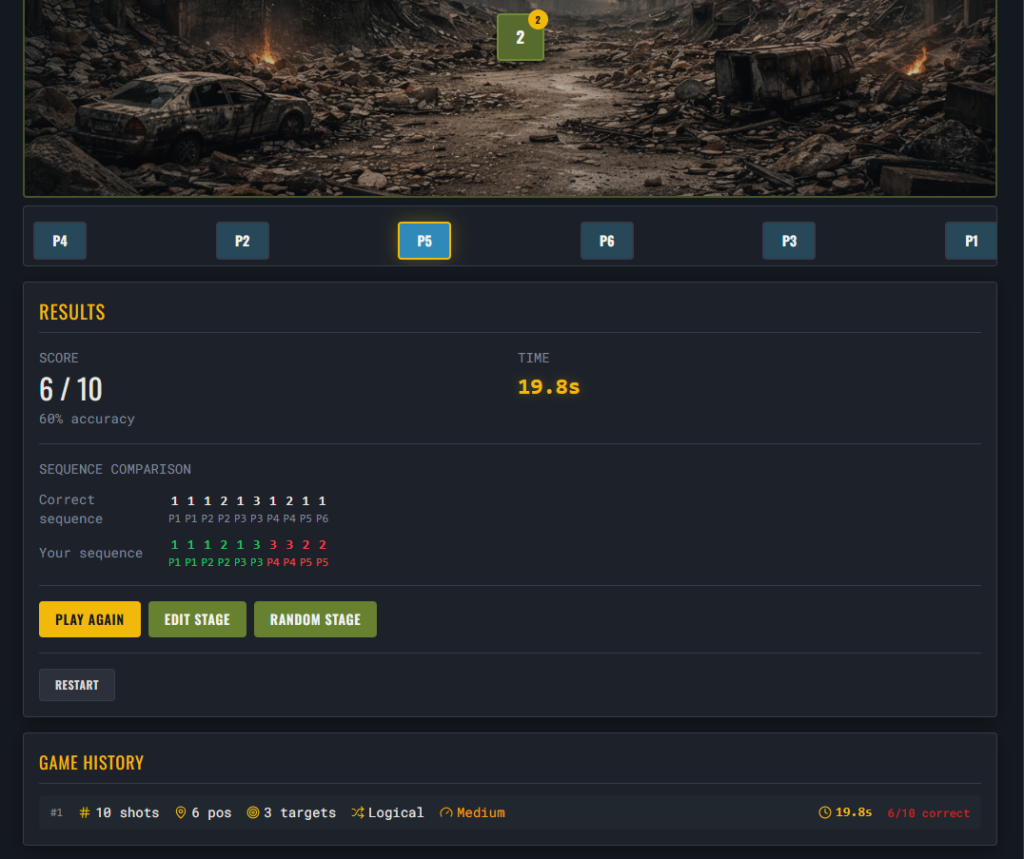
Reviewing your results is key to following up your progress
Upptäck mer från
Prenumerera för att få de senaste inläggen skickade till din e-post.